
Call Support 24/7
+86-28-68724242

product

Fixed Gas Detection, Engineered for Hazardous Industries
Short Description:


AEC2232bX Series Industrial Gas Detectors — ATEX-Ready Combustible, Toxic & Multi-Gas Detection
28+ years · 700+ experts · TOP-3 Chinese gas-alarm manufacturer · Shenzhen-listed (300112)
ACTION gas detectors are OEM & ODM supported and true mature devices, long-tested in millions of projects domestic and overseas since 1998! Don't hesitant to leave your any inquiry here!

Fixed Gas Detection, Engineered for Hazardous Industries
AEC2232bX Series Industrial Gas Detectors — ATEX-Ready Combustible, Toxic & Multi-Gas Detection
1. Why ACTION — A National-Scale Manufacturer Behind Every Detector
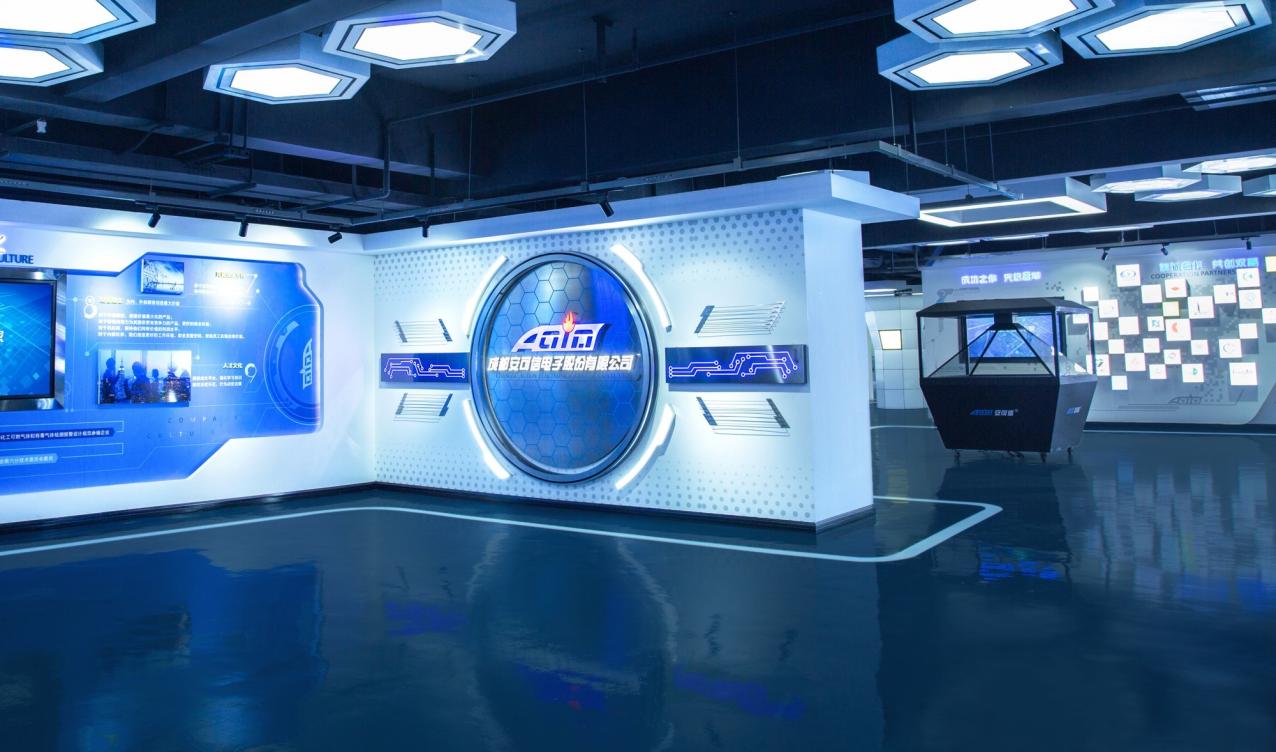
Chengdu ACTION Electronics Joint-Stock Co., Ltd (ACTION) has designed and manufactured industrial gas detection instruments since 1998 — more than 26 years of field experience. Today the company employs over 700 people across a 28,000 m² modern manufacturing campus, and reported annual sales of USD 100.8 million in 2023. ACTION ranks among the TOP-3 gas-alarm manufacturers in China, and is an A-share wholly-owned subsidiary of Maxonic, listed on the Shenzhen Stock Exchange under code 300112. Its industrial gas detector range is deployed in more than 60 countries, in every industry where combustible, toxic or asphyxiating gases must be monitored around the clock.
Standards leadership. ACTION is a co-editor of three Chinese national standards — GB 15322 (combustible point sensors), GB 16808 (gas alarm controllers) and GB/T 50493 (design standard for flammable and toxic gas detection in petrochemical engineering) — and sits on national gas-analysis and fire-protection standardization committees.
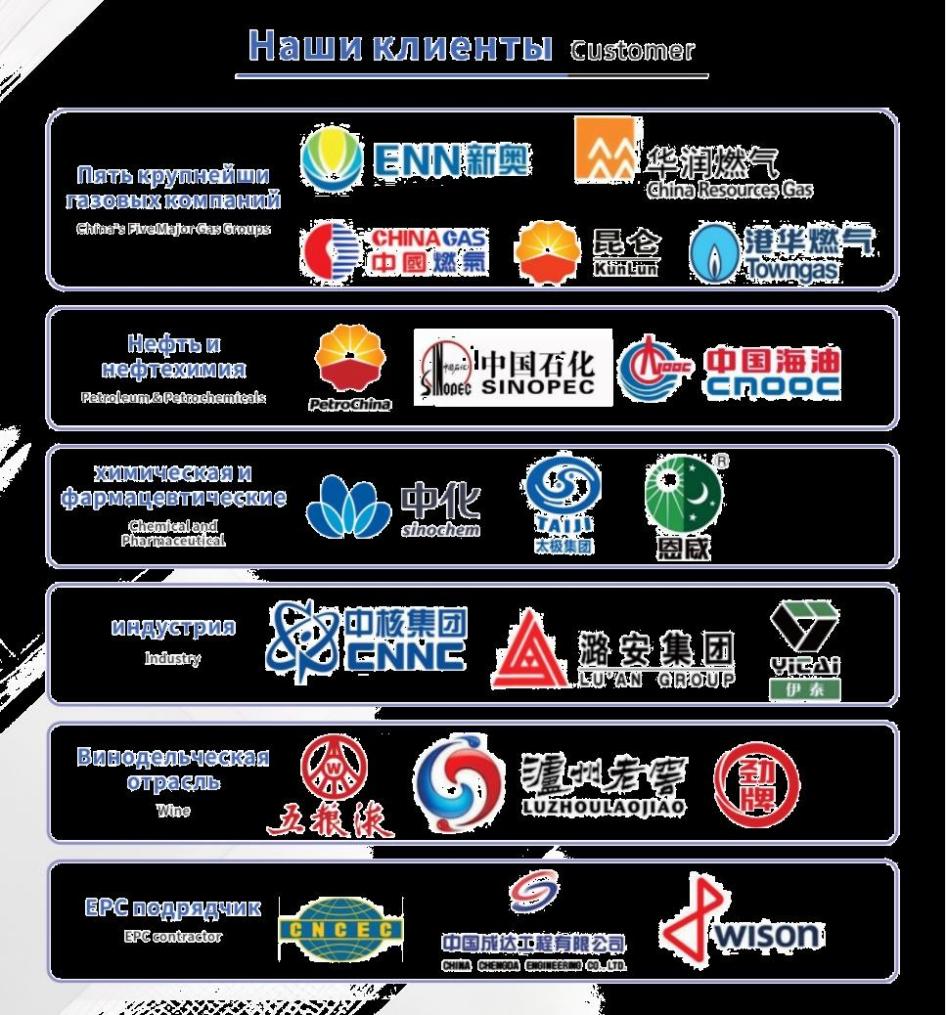
Blue-chip installed base. ACTION is a qualified supplier to SINOPEC, CNPC, CNOOC and CNNC; to five of China's largest city-gas groups (China Gas, China Resources Gas, Kunlun Energy, Towngas and ENN); and to leading chemical groups, EPC contractors and design institutes. That installed base means every fixed detection system we ship reflects site-proven engineering, not laboratory-only theory.

Research and sensor technology. A dedicated team of more than 120 R&D engineers holds over 60 invention patents and 44 software copyrights, supported by approximately 15% of revenue reinvested in R&D each year. A seven-year joint program with the Fraunhofer research organization in Germany is focused on high-end infrared (IR) and MEMS sensor technology — the technology behind the long-life, low-drift modules in our current detector family.
When buyers choose ACTION, they choose a partner that can deliver detectors, controllers, networking and local monitoring software from one qualified, audited supply chain — a complete product family rather than a collection of unrelated components.
2. The AEC2232bX Series — One Fixed Platform, 200+ Gases
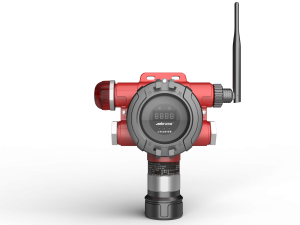
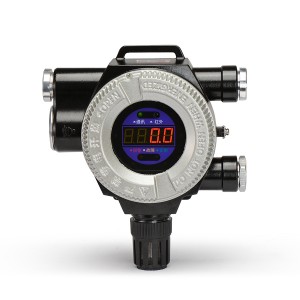
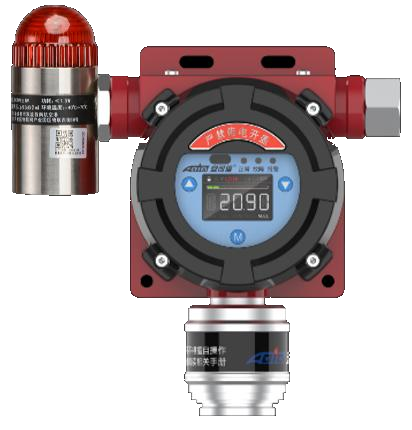
The AEC2232bX is ACTION's flagship fixed point detector for combustible, toxic and hazardous gases and vapors. It was the first integrated gas detector of its kind developed in China, and its interchangeable module library now covers more than 200 detectable gases. One housing platform serves refineries, offshore platforms, compressor stations, chemical plants, steel mills, city-gas regulating stations and food factories — an industrial gas detector designed for 24-hour unattended duty in Zone 1 / Zone 2 hazardous areas. It is positioned as an ATEX gas detector for hazardous areas: ATEX and IECEx type testing and the factory audit have been completed by TÜV Rheinland, with the formal certificates expected to be issued in October 2026 (in progress).
2.1 Five engineering advantages
2.2 One platform for every gas your site searches for
The catalytic module makes the AEC2232bX a highly responsive combustible gas detector; it is equally at home as a flammable gas detector for hydrocarbon vapors, as a methane detector in natural-gas compressor houses, or as a propane gas detector and LPG gas detector in cylinder storage and filling areas. Projects specifying multiple combustible gas detectors across many bays can standardize on one housing and swap only the calibrated module.
Electrochemical modules turn the same transmitter into a toxic gas detector: an H2S point in sour-gas service — formally a hydrogen sulfide (H2S) detector — an ammonia detector in refrigeration plants, or a carbon monoxide detector at boiler outlets, where maintenance teams refer to it simply as the co detector or co alarm. A dedicated oxygen (O2) detector module guards against oxygen deficiency in confined and inerted spaces. The IR module provides a poison-resistant natural-gas head, and the same IR channel works as a carbon dioxide sensor for CO₂ storage, breweries and cold-chain rooms.
The integrated PID module extends coverage to VOCs, making the platform a practical multi gas detector for mixed-process areas — often specified as a multi-gas detector where one head must cover several hazards. An on-board leak-trend mode tracks background concentration and flags early leakage long before the LEL alarm level.
2.3 Explosive gas + CO in one zone
Boiler rooms, furnaces, battery halls and steel-rolling lines face two hazards at once: incomplete combustion generates CO, while fuel lines and burners can release explosive natural gas or LPG. Paired AEC2232bX heads in one monitored zone deliver a combination explosive gas and carbon monoxide alarm: one controller logic — effectively a combined carbon monoxide alarm with an LEL channel — starts ventilation, closes fuel valves and alerts operators to both threats simultaneously.

2.4 AEC2232bX technical specifications
| Parameter | Specification |
|---|---|
| Detectable gases | Combustible gases and toxic / hazardous gases & vapors — 200+ gases |
| Detection principles | Catalytic combustion, Semiconductor, Electrochemical, Infrared (IR), Photoionization (PID) |
| Sampling method | Diffusive |
| Operating voltage | DC 24 V ± 6 V |
| Power consumption | ≤ 3 W (DC 24 V) |
| Display | Integrated LED / OLED on-site real-time concentration display |
| Protection grade | IP66 |
| Explosion-proof grade | Ex db IIC T6 Gb / Ex tb IIIC T130 °C Db (catalytic); Ex db ib IIC T6 Gb (electrochemical) |
| Conduit thread | NPT 3/4" internal thread |
| Housing material | Cast aluminum or stainless steel |
| Dimensions | 204 × 155 × 70 mm (L × W × T) |
| CE / RoHS | Yes — held (EMC Directive 2014/30/EU; RoHS) |
| SIL2 | IEC 61508:2010 functional safety assessment, HFT = 0, by TÜV Rheinland |
| ATEX / IECEx | Type testing & factory audit completed by TÜV Rheinland; certificate expected October 2026 (in progress) |
2.5 Sensor technology → target gas
| Sensor technology | Principal target gases | Typical application |
|---|---|---|
| Catalytic combustion | Alkanes, gasoline vapors and general combustible gases (LEL) | Natural-gas bays, LPG stores, refinery pump zones |
| Semiconductor | Alcohols, esters and light organic vapors | Pharma, printing, coatings |
| Infrared (IR) | Alkanes, alkenes, toluene — and CO₂ | LNG, tank farms, CO₂ storage, breweries |
| Electrochemical | O₂, H₂S, CO, NH₃, Cl₂, SO₂ and other toxic gases | Sour gas, boiler houses, refrigeration, water treatment |
| PID / Compound PID | VOCs and trace organic vapors | Chemical and petrochemical process areas |
| Compound catalytic | Multi-carbon hydrocarbons (gasoline, kerosene) | Fuel depots, airports, garages |
3. A Complete Gas Detection System — Detectors, Controllers & X-GasView
Point detectors rarely make a project on their own; specifications usually call for a complete fixed detection system. ACTION AEC2392-series rack alarm controllers support split-line three-wire 4–20 mA channels, the Abus+ four-wire bus for 1–256 field devices, and standard Modbus RTU over RS485, with passive relay outputs to the fire-and-gas panel and serial/OPC/Ethernet interfaces into the plant DCS, PLC or SCADA. A single main card takes up to 34 channel cards and a 60-position cabinet scales past one hundred points, so cabinets can be combined into systems of well over a thousand points. The same architecture is the reference oil and gas detection system greenfield and brownfield projects, from well pads to tank farms.
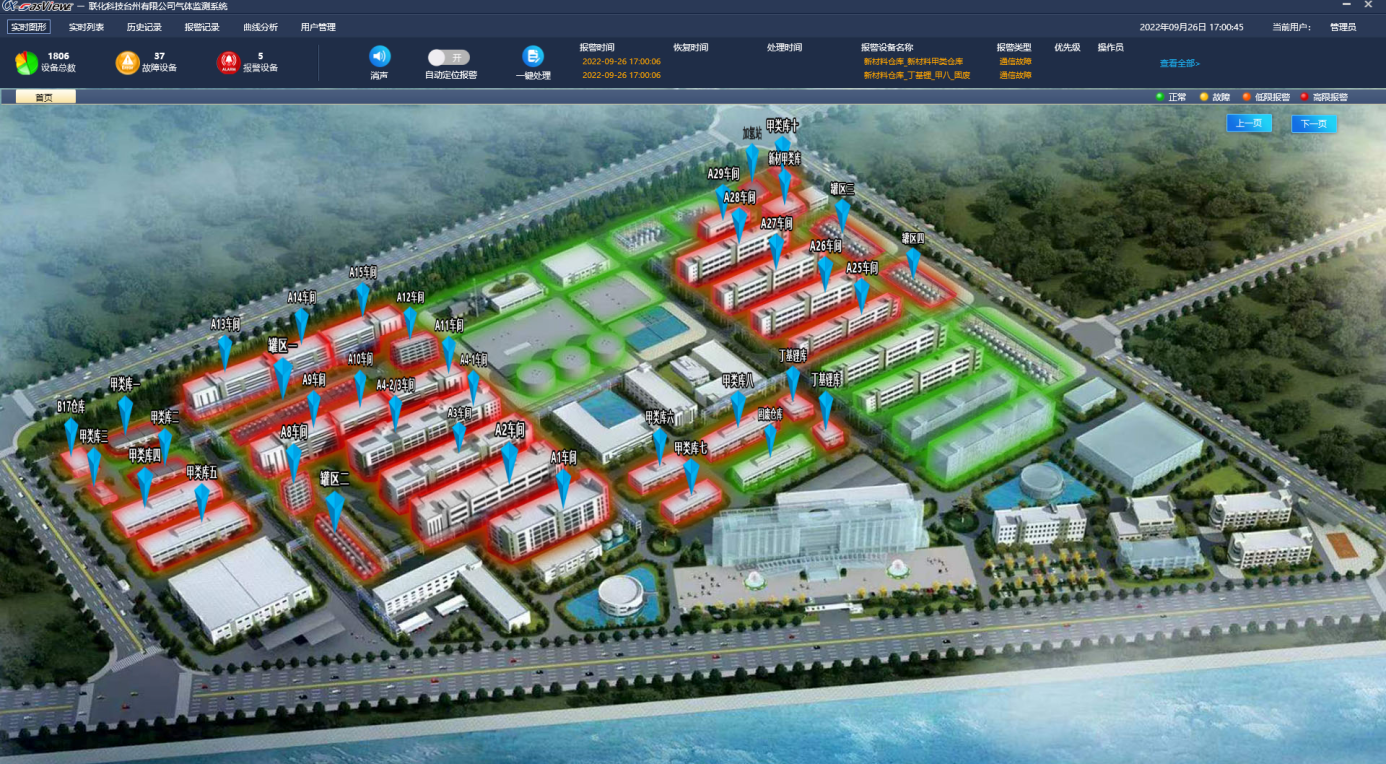
This is the architecture ACTION recommends for overseas projects: a self-contained, three-tier gas detection system. Field AEC2232bX heads report to AEC2392 rack controllers, which feed an engineer station running ACTION's X-GasView software on the plant intranet — real-time data, 3D and floor-plan graphics, historical trends, alarm/event logs and one-click reports, secured by a hardware dongle and kept entirely on the customer's own network.
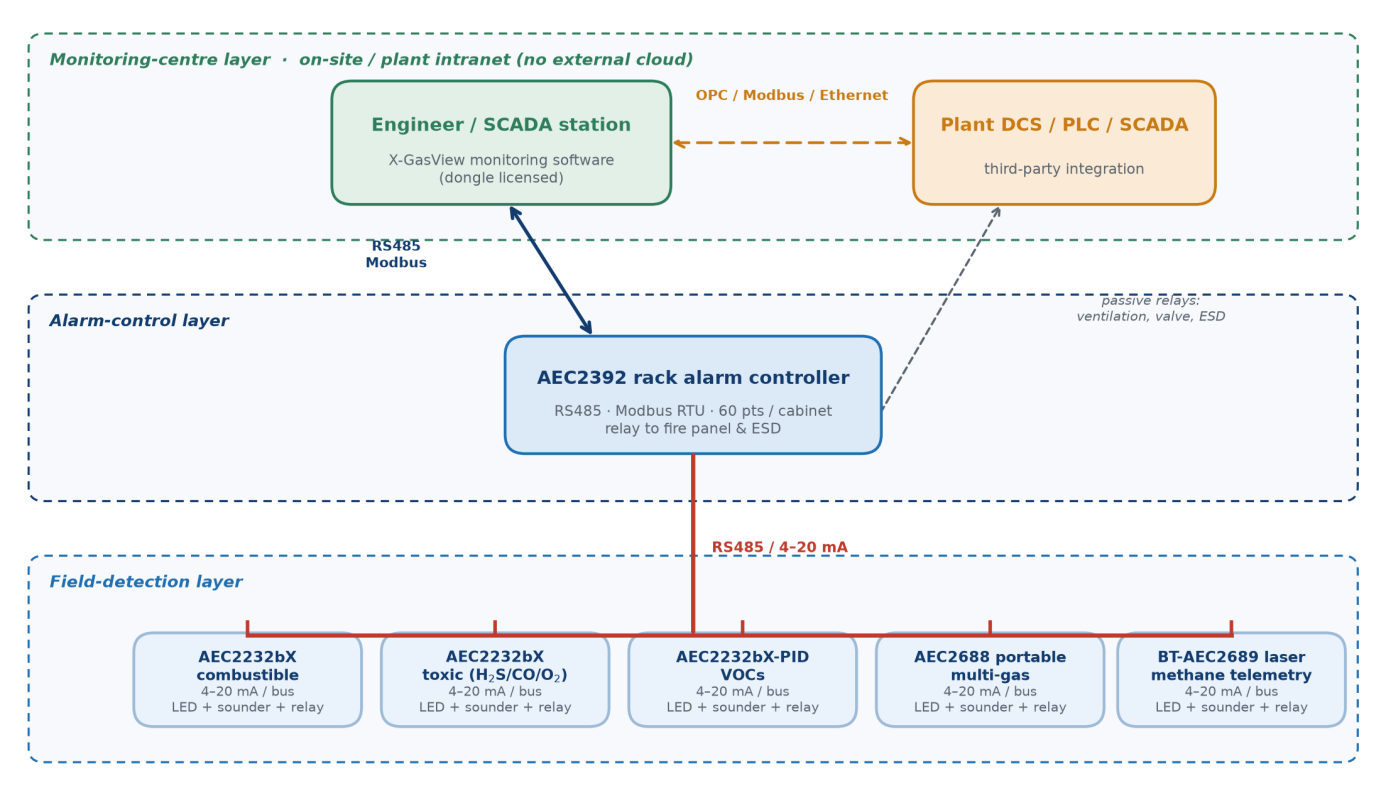
The field layer is the point-detector tier: AEC2232bX heads, controller panels, relays and valve-interlock outputs. Detectors share one calibration and spare-parts family, which cuts lifecycle cost for EPC and maintenance contractors.
3.1 Portable protection for patrol and confined-space work
Fixed coverage is supplemented by the AEC2688 portable gas detector, a five-gas instrument covering combustibles, O₂, H₂S, CO and one of SO₂ / NO₂ / NH₃ / Cl₂. Diffusive or pumped sampling with a swan-neck probe up to 15 m supports vessel entry, tank inspection and pre-work checks; the unit carries Ex ib IIC T4 Gb and IP66 ratings. Such portable instruments are standard PPE for maintenance crews and act as a mobile gas leak detector wherever fixed heads are temporarily absent during shutdowns.
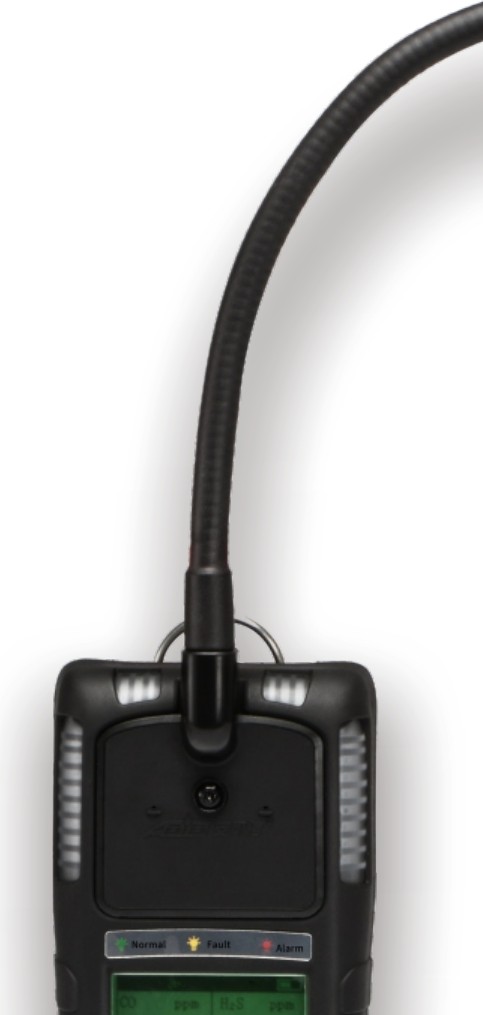
For pipelines that cannot be approached, the BT-AEC2689 laser methane telemetry detector measures at 0.5–150 m with an eye-safe Class I laser and millisecond response — a remote methane detector for overhead mains, buried risers, wellheads and metering skids, used alongside the fixed heads rather than in place of them. A multi-gas detector remains the crew tool for close-quarters inspection.
3.2 X-GasView local monitoring software
X-GasView is ACTION's proprietary gas-monitoring software for the central control room. It acquires live data from every AEC2392 controller and presents real-time concentration, device status, zone graphics, alarm acknowledgement, historical trends and searchable alarm/fault records, with one-click report generation. Because it runs on a local engineer station or the plant intranet with a hardware-dongle license, data stays on the customer's network — an important requirement for oil & gas, petrochemical and government projects in the Middle East, Central Asia, South Asia and the CIS. The I/O layer speaks serial, OPC, Modbus and Ethernet, so the same GDS integrates with third-party DCS, PLC and smart instruments.
4. Applications & Industries — Matching Detectors to Buyer Search Intent
The same AEC2232bX platform is configured, sensor by sensor, for the hazards of each industry. Below is how products map to the way procurement and EPC teams actually search for them.
4.1 Oil & gas — upstream and midstream
Wellheads, gathering stations, metering skids, dehydration and injection units, and oil-transfer stations use a gas detection system for oil and gas architecture combining catalytic and IR heads with laser telemetry. Every natural gas detector point feeds the control-room alarm and valve-interlock matrix.

4.2 Refining & petrochemical
Atmospheric/vacuum units, catalytic cracking, hydrotreating, sulfur recovery, delayed coking and product tank farms each need a tailored refinery gas detector plan: an H2S gas detector at sour-water and sulfur-recovery units, a hydrogen sulfide (H2S) detector along grade-level escape routes, and combustible heads — or a flammable gas detector — at pump seals and tank vents.

4.3 Chemical, coal-chemical, pharmaceutical & steel / metallurgy
A toxic gas detector matrix addresses CO, SO₂, H₂S, Cl2 (chlorine), NOx and NH₃, including an ammonia detector at refrigeration skids; an oxygen (O2) detector protects personnel where nitrogen purge or inert gas is used; and a carbon monoxide detector — often labeled the co detector or co alarm on site — is fitted near furnaces and reheat lines. Dual-hazard zones use combination explosive gas and carbon monoxide alarm logic.

4.4 City gas, LPG / LNG, commercial & catering, gas stations
Distribution networks and fuel retailers specify propane gas detectors at LPG stations and cylinder stores, an LPG head in commercial kitchens, a methane detector in valve wells, while field crews carry portable gas leak detectors to survey the distribution mains. The same propane head is also the standard choice for forklift LPG fuel points, and an LPG gas detector heads the kitchen fire-safety package.
4.5 Brewery, food & beverage, cold storage
Fermentation, dry-ice storage and cold rooms require a carbon dioxide sensor for CO₂ enrichment and asphyxiation risk; ammonia refrigeration packs use an ammonia detector, while fuel-gas lines retain standard flammable-gas heads.
4.6 Underground valve wells, pipe networks & unmanned stations
Laser methane PTZ/telemetry units run on battery power for 3–5 years, recheck every 10 seconds to suppress false alarms, and report to the local alarm controller and X-GasView workstation — so unmanned valve wells and remote stations are never silent. A refinery gas detector fleet and a city-gas network can therefore be supervised from the same on-site control room.
5. Quality, Manufacturing & Certification
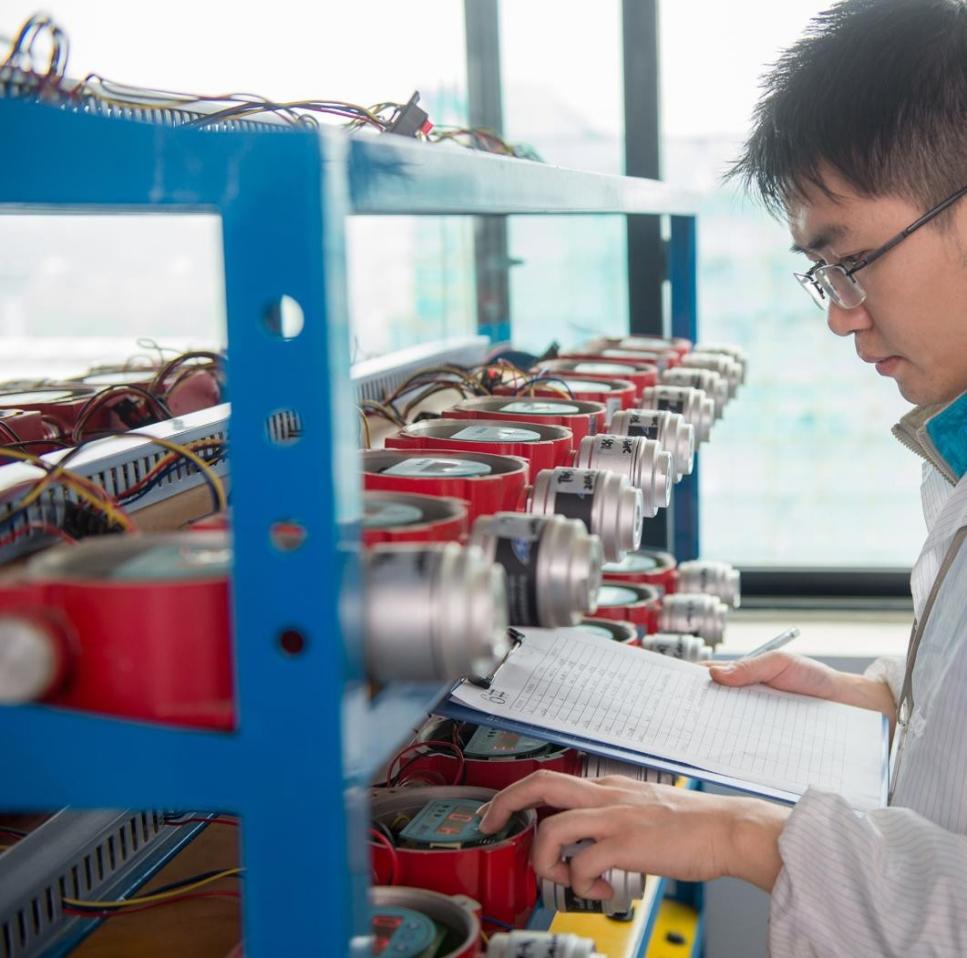
Ten production lines — including three automated SMT lines, two DIP lines and two conformal-coating lines — operate alongside China's first fully automated household-detector line, with an annual capacity of 7 million units. AOI inspection, MES/ERP/CRM traceability, wave and reflow soldering, environmental chambers, gas-cycling calibration rigs and burn-in stations are staffed by more than 200 trained production personnel. Every AEC2232bX is gas-calibrated, aged and leak-checked before packing.
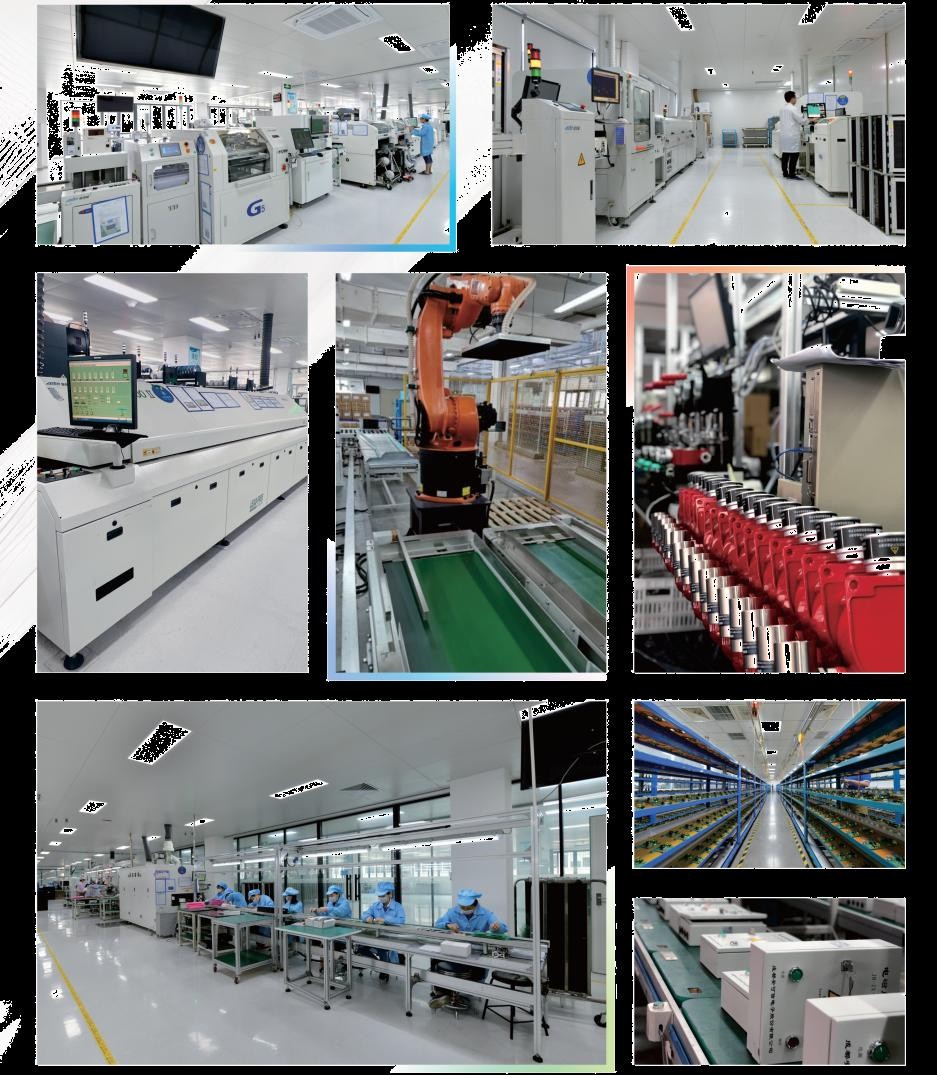
Design verification follows GB 15322.1-2019, GB/T 50493-2019, the GB 3836 series and GB 12358, in addition to the export compliance below. Certification claims are model-specific and kept deliberately precise — please use this table when preparing tender compliance annexes.
5.1 Model-specific compliance table
| Model / version | Compliance and certification status |
|---|---|
| AEC2232bX — 2024 export / international version | CE & RoHS held (EMC Directive 2014/30/EU). SIL2 functional safety assessment to IEC 61508:2010, HFT = 0, by TÜV Rheinland. ATEX & IECEx type testing and factory audit completed by TÜV Rheinland; certificates expected October 2026 (in progress). Ex db IIC T6 Gb / Ex tb IIIC T130 °C Db; IP66. |
| Russian-market OLED-display version (separate model) | All AEC2232bX core protection plus EAC (Eurasian Customs Union) and PAC (Russian pattern-approval, Rosstandart), for Russian-led projects that require those approvals. |
| Base AEC2232b model | CNEx (China) certification; intended for the domestic market. |